Simulating Atmospheric Flows
High-fidelity numerical models and data pipelines analyzing the aerodynamic interaction between utility-scale solar arrays and the atmospheric boundary layer to optimize clean energy yield.
Numerical Models
Three core computational initiatives addressing turbulence modeling, large-scale data ingestion, and thermal-fluid coupling in solar energy systems under real-world atmospheric conditions.
Turbulence Modeling
Data Ingestion Pipeline
Thermal-Fluid Coupling
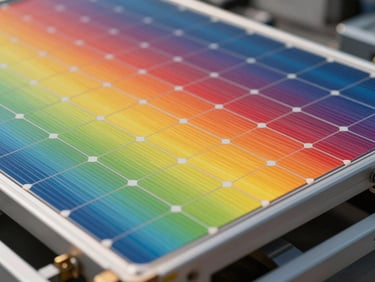
Numerical solvers investigating how convective heat transfer coefficients vary across solar panels, optimizing thermal performance under diverse atmospheric boundary layer conditions.
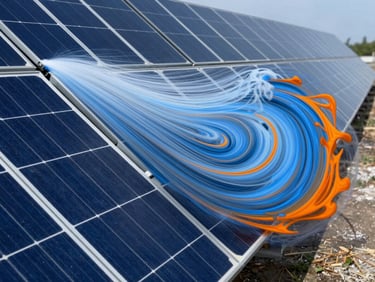
Large-Eddy Simulations resolving micro-scale wind patterns, structural wind loads, and wake interactions within multi-row utility-scale solar installations across complex terrains.
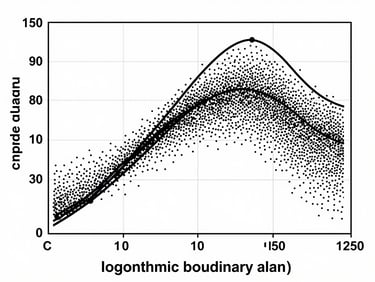
An open-source Python framework designed to parse, clean, and analyze high-frequency sonic anemometer data collected from active field research campaigns.
Core Technologies
Computational Toolchain
The research utilizes high-performance computing clusters to run open-source CFD solvers and custom data analysis pipelines, ensuring fully reproducible scientific workflows for peer-reviewed publication.
• OpenFOAM & ANSYS Fluent (CFD) • Python (NumPy, SciPy, Pandas) • High-Performance Computing (SLURM) • Git & Open-Source Version Control